

A practical guide to how full-body MRI works, what it can and cannot tell you, and what to
consider before booking.
By Jess Wilson, Functional Nutritionist
Medical imaging and service information attributed to OneMRI.
The short answer
A full-body MRI is a preventative health scan that uses magnetic fields and radio waves, not ionising radiation, to capture detailed images inside the body. OneMRI, an Australian full-body MRI provider, scans 13 organs and systems from head to upper thigh at 50+ partner clinics across Australia. You can book without a GP referral, and the $2,990 price includes a specialist
radiologist’s report and a post-scan consult with a OneMRI doctor. It gives you a different kind of information from your regular health checks, and works alongside recommended screening, not instead of it.
People are curious about full-body MRI for all sorts of reasons. Some want to understand what the technology actually involves. Others wonder whether it adds anything to their usual blood tests and health checks. As a functional nutritionist, I think the sensible starting point is to ask what a test can tell you, what it cannot tell you, and what you would do with the results. Here are the questions I would want answered before considering a scan.
1. What is a full-body MRI?
A full-body MRI is a preventative health scan that captures detailed pictures of the body without using ionising radiation or contrast dye.
Unlike a test ordered to investigate one particular symptom, a proactive full-body MRI examines a broader set of areas. OneMRI describes its service as a head-to-upper-thigh scan of 13 organs and systems. That is a useful distinction: “full-body” does not literally mean head-to-toe. Rather, this coverage has been fine-tuned to reduce time in the machine and scan cost, while focusing on areas of the body most relevant to MRI technology and preventative health. See OneMRI’s scan overview for an explanation of its scan.
2. How is it different from an MRI your GP orders?
A GP-requested MRI is usually targeted at a particular clinical question, while a proactive full-body MRI covers a wider area without being designed to investigate one specific symptom.
If someone has persistent back pain or a neurological concern, a clinician may request an MRI chosen to diagnose that particular problem. A proactive scan uses a different protocol looking at general signs of change across the body before specific symptoms are a concern. Neither approach is a substitute for the other. A targeted scan is the more appropriate choice when there is a specific symptom that needs investigating, and some clinically indicated MRI examinations may qualify for Medicare benefits.

3. Do I need a referral for a full-body MRI in Australia?
No, you do not need a GP referral to book a full-body MRI.
Full-body MRI is a preventative health scan that you can book directly, without a referral. This is about empowering people with their own health data in a proactive setting. That does not mean a GP becomes irrelevant. A referral-free booking is about access to the service, not about bypassing clinical judgement. If you’re concerned about specific symptoms or an existing diagnosis, start with your GP to choose a diagnostic scan that’s right for you. You can also share any subsequent imaging report with your usual GP.
4. Does a full-body MRI use radiation?
No. MRI uses strong magnetic fields and radio waves, not the ionising radiation used in X- rays and CT scans. That is one of the most common points of confusion. MRI is chosen for proactive full-body health scans for several reasons, one of which is no exposure to ionising radiation. This makes it a suitable choice for repeat or ongoing scans. No ionising radiation does not mean MRI is suitable for absolutely everyone. Because of its powerful magnets, there are other safety considerations like implanted devices, metal fragments and other circumstances that require specific safety checks. Pregnancy and claustrophobia should also be discussed with the MRI team before booking.
5. What does a full-body MRI actually show?
It provides structural images of the body’s major organs and systems from head to upper thigh. According to OneMRI, its scan covers 13 organs and systems from the head to the upper thigh, including selected structures in the head and neck, chest, abdomen, pelvis and spine. OneMRI says a specialist radiologist reviews the images for signs that could be linked to more than 500 conditions. That is the provider’s description of the scope of review, not a promise of what the scan will show. Each person’s results are unique to them, and their results are explained in a follow-up doctor consultation. For the exact areas included, see the areas scanned.
6. What can’t a full-body MRI show?
Like any scan or test, a full-body MRI is not designed to be the one and only scan, and has
its limitations.
Most full-body MRI scans, like OneMRI’s standard scan, extend from the head to the upper thigh covering what’s deemed to be the more clinically significant areas in the context of preventative health. This means it doesn’t scan the arms, knees, lower legs or feet. MRI in general is best suited to static, cross-section images of soft tissue making it a strong option for organs, muscles
and blood vessels. This means it shows the structure of the organs and systems, but not necessarily how they’re functioning. The technology also limits what can be seen in air-filled or moving areas like the lungs and bowel.
This places MRI as a suitable option for a general full-body preventative scan showing the structure inside the body. It provides more information to support recommended tests and regular screening like blood tests, colonoscopies, and breast screening – not a replacement for them.

7. What happens if the scan finds something unexpected?
An unexpected finding may need no action, monitoring or further medical investigation, depending on what it is. Because a full-body MRI looks across the body for signs that could be linked to hundreds of conditions, it’s normal for a report to note at least one finding. Many of these are common changes that become more likely with age and don’t need urgent attention. Some may come with a recommendation for a further test or a closer look, which can mean more scans, appointments and costs. Whatever the result, a OneMRI doctor goes through the report with you in a post-scan consult, explains what was seen in context, and guides you to your regular doctor if anything needs further investigation or monitoring. This is worth thinking about before booking, so you know what to expect.
8. Is a full-body MRI worth it, and who is it for?
It can be, depending on what you want from it. A full-body MRI isn’t an essential health check for everyone, but it’s designed for adults who feel well and want a detailed baseline of their internal health.
I’m interested in useful information, not testing for testing’s sake. A full-body MRI gives a structural view of 13 vital organs and systems, which is a different kind of information from blood tests or a GP check, and provides a health baseline you can compare against over time. It’s a significant personal expense, and it can lead to follow-up questions and tests. It’s less likely to be
right for you if you plan to replace your regular checks like breast, bowel and cervical screening, or if you have symptoms that need investigating, like chest pain or persistent neurological changes. Those deserve prompt, targeted medical care. Ask yourself what you’d do with the information, and whether a detailed baseline of your internal health is something you’d value.
9. What if my blood tests are normal but I still don’t feel right?
A full-body MRI is not automatically the next answer when blood tests are normal. Blood tests and MRI answer different questions. A normal blood result does not mean every possible issue has been excluded, but neither does it mean a full-body scan is the best next step.
From a functional nutrition perspective, I would want to understand the symptoms, history, nutrition, sleep and existing investigations first, while making sure a medical practitioner assesses persistent concerns. Sometimes the next useful step is a targeted test or specialist referral, not more general testing.

10. Does family history make a full-body MRI more useful?
Family history is a common motivator for people looking into full-body MRI as they seek to learn more about what’s happening inside their bodies. But family history is varied and other scans or tests could be better suited.
The details matter: which relative, which condition, and at what age? Some family histories warrant specific screening, genetic counselling or earlier medical review. A full-body MRI does not replace those pathways but adds new information about one’s structural health. If your family history is driving the decision, it could be worthwhile discussing with your GP or an appropriate
specialist.
11. How does MRI fit alongside blood tests and wearables?
MRI, blood tests and wearables provide different types of information, and none offers a
complete picture alone. Blood tests can measure markers such as glucose, iron status and other biochemical indicators. Wearables estimate trends in activity, sleep and sometimes heart rate. MRI provides images of selected internal structures. They are not interchangeable. The question is whether the information is relevant, reliable and actionable, not how many data points you can collect.
12. How long does a full-body MRI take?
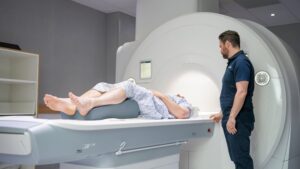
A OneMRI full-body MRI takes around 60 minutes.
You lie on a scanning table while the machine collects images. MRI machines make loud knocking or tapping sounds, so hearing protection is provided. You need to stay reasonably still for clear images, and the radiographer can explain the process. Some people find the opportunity to lie quietly restful; others find the enclosed space uncomfortable. Neither response is unusual.
13. How should I prepare?
Follow the provider’s specific preparation and MRI safety instructions. OneMRI, for instance, conducts an MRI safety and eligibility screening to ensure the scan is right for you. This can be impacted by certain implants, prior surgery, metal fragments, pregnancy or possible pregnancy, and any concerns about enclosed spaces. You will generally need to remove jewellery and other metal items. OneMRI advises that a short fasting period is required, but confirm the current instructions directly with your chosen provider rather than assuming the same rules apply to every MRI appointment.
14. How much does a full-body MRI cost in Australia?
A OneMRI full-body MRI costs $2,990, which includes the scan, a specialist radiologist’s report and a post-scan consult with a OneMRI doctor. View current OneMRI pricing
It is a self-funded proactive service and generally is not covered by Medicare or private health insurance. OneMRI’s pricing is paid in stages with refundable deposits as you progress. OneMRI also offers payment plans. Check the current pricing, payment terms and inclusions directly with the provider. A reasonable question to ask is whether further appointments or tests, if recommended, would involve separate costs.
15. Where can I have one, and what happens afterwards?
OneMRI works with 50+ partner clinics across Australia, and every scan includes a specialist radiologist’s report and a post-scan consult with a OneMRI doctor.
The main regions include Sydney, Melbourne, Brisbane, Perth, Adelaide, Canberra, Newcastle, Wollongong, the Gold Coast, Sunshine Coast, Townsville and Tasmania. Here in Perth, there are clinics in Subiaco, Innaloo and Murdoch. An Australian specialist radiologist reviews the images, most reports are ready within two weeks, and a OneMRI doctor then goes through the report with you by phone. You also keep your full set of images, a baseline you can compare against over time and share with your GP.
Find OneMRI clinic locations
Questions I would ask before booking any full-body MR
- What exactly is included in the scan, and what is excluded?
- Who interprets the images, and what are their qualifications?
- Is a consultation to explain the report included?
- What happens if an unexpected finding needs follow-up?
- How long do results take, and who communicates urgent findings?
- What are the full costs, including any likely follow-up expenses?
- How does this fit with my existing screening and medical care?
The bottom line
More information can be useful, but only when you understand its limits. A full-body MRI is one possible piece of a much bigger health picture, not a replacement for good medical care or established screening programs.
About the author and medical information
Jess Wilson is a Perth-based functional nutritionist with approximately 10 years of experience supporting people to better understand nutrition, health behaviours and the information they receive through testing. She is not a medical practitioner or radiologist.
Provider-specific information about MRI coverage, process, pricing and reporting was supplied by OneMRI and is presented as such. Clinical claims require review and approval by OneMRI’s appropriately qualified clinical team before publication. This article is general educational information and not medical advice.
Paid partnership with OneMRI.
Suggested independent reading
Healthdirect Australia: MRI scan and medical imaging information (healthdirect.gov.au).
Australian Government Department of Health: National screening programs (health.gov.au).


